

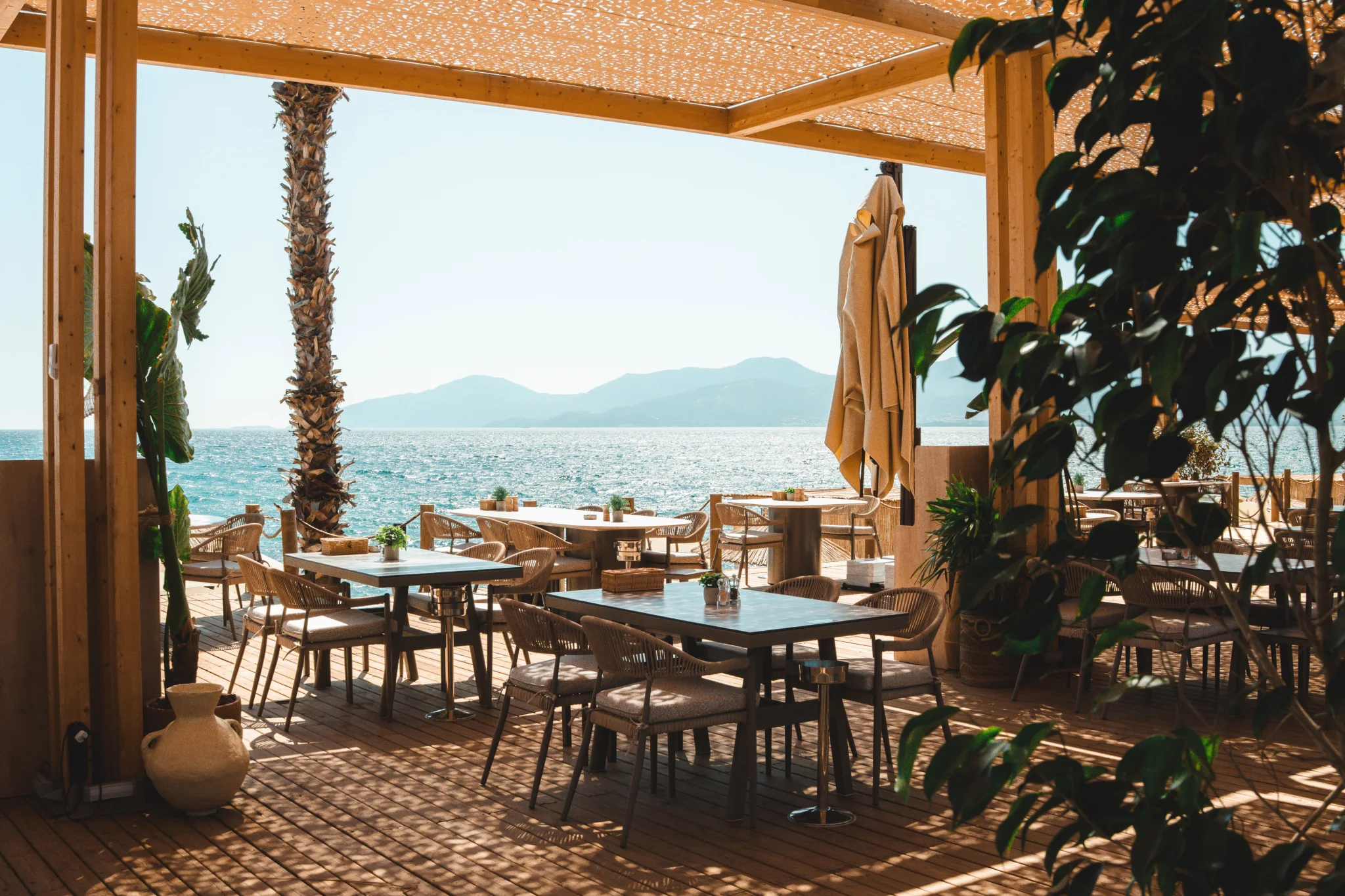
Food on the Datça Peninsula draws on almond trees clinging to rocky slopes, pine forest, olive groves and the sea that wraps around it on three sides. Here it is the calendar, rather than elaborate recipes, that decides what reaches the table: almond trees flower at the end of winter, green almonds appear at the market in spring, almonds are gathered through the summer, and autumn brings the pine honey harvest and the first tomatoes from the fields.
This guide gathers the local produce and dishes worth seeking out, with notes on where and when you are likely to find them. Details of protected products are taken from the registration documents of the Turkish Patent and Trademark Office (TÜRKPATENT).
Datça almonds
Almonds are among the first things people associate with Datça. Orchards spread across the peninsula's sloping land are a mainstay of local livelihoods, and a great many almond varieties grow here, some of which are not found anywhere else.
Datça Nurlu Almond
The area's best-known variety, the nurlu almond, was registered by TÜRKPATENT in 2023 as a designation of origin under the name "Datça Nurlu Bademi", with the Datça district as its boundary. The registration describes a relatively large, sweet almond with a hard shell whose outer surface is pitted with small holes, ripening a little later than other varieties. It is sold fresh, dried in the shell, and as raw or roasted kernels.
Green and fresh almonds
Çağla is the unripe almond still inside its green outer husk. It turns up on market stalls in spring and goes into salads and yoghurt-based meze. From early summer, fresh almonds are picked by hand and eaten once their thin inner skin has been peeled away. The dried almond harvest takes place over the summer and usually runs until the end of August: the trees are shaken, the nuts drop onto sheets laid on the ground, the green husks are removed and the almonds are left to dry in the sun.
Almond sweets and almond coffee
Almonds turn up in sweet form all over Datça: almond paste, biscuits, sugared almonds and almond-studded Turkish delight are familiar sights on the stalls. Bademli incir, a dessert that combines dried figs with almonds, is another local favourite. On a cool day try a warming almond coffee, and at the market look for bal badem, made with honey and almonds.
Honey, olive oil and local produce
Alongside almonds, beekeeping contributes to the Datça economy. The peninsula's pine forests, thyme-covered hillsides and almond orchards each produce honey with a character of its own.
Pine honey
Datça is one of the districts within the boundary of Muğla Pine Honey ("Muğla Çam Balı"), registered as a designation of origin in 2018. Bees make it from the sweet secretion left by a scale insect, Marchalina hellenica, known locally as the basra böceği, which lives on Turkish red pine. It is a dark honey with a resinous, piney scent that crystallises slowly. According to the registration, it is produced between mid-August and the end of November.
Thyme and almond blossom honey
Thyme honey, gathered from the thyme that grows on the hillsides, is one of the products closely linked with Datça. Some local producers also sell almond blossom honey, collected from the orchards that flower at the end of winter.
Olives and olive oil
Together with almonds, olives are one of the peninsula's main crops. Olive oil is the foundation of local cooking, used for wild greens, vegetable dishes and meze alike. Look for olive oil, jams and honey from local producers at the market and on festival stalls.
Datça Tomato
The second protected product to carry the Datça name is the Datça Tomato ("Datça Domatesi"), registered as a designation of origin in 2024 following an application by Datça Municipality. It is grown in open fields from local seed and seedlings, and has a thin skin, glossy deep-red colour and juicy flesh. Seedlings go in during the second half of July, and picking starts in October and continues to the end of January, so this is very much an autumn and winter tomato. Among the areas where it is grown, Kızlan, where our hotel is located, stands out alongside Karaköy and Emecik.
Aegean greens and olive oil dishes
Wild and cultivated greens play a large part in Datça cooking. Depending on the season, plants gathered from hillsides, fields or the shoreline are sautéed in olive oil, boiled and dressed as salads, or used in rolled and stuffed dishes. Market stalls are a good place to get to know them.
Kenger, labada and courgette flowers
Locally, kenger, a thistle-like wild plant, is cooked into a stew, labada (wild dock) leaves are rolled into sarma, and courgette flowers are filled with a rice stuffing. Stuffed courgette flowers are a familiar sight on the summer meze table.
Radika, samphire and other greens
As across much of the Aegean, radika (wild chicory), arapsaçı (wild fennel), şevketibostan and mallow are among the greens that reach the table; şevketibostan is gathered from winter until late spring. Samphire (deniz börülcesi), known for its lightly salty taste, is usually boiled and served with olive oil.
Seafood
On a peninsula with the sea on three sides, fish is a natural part of the cuisine. You will find fish restaurants around Datça harbour and in the coastal villages, with menus that change with the season and the day's catch.
Catch of the day
Fresh fish cooked simply, grilled or steamed, is an easy way to taste it at its most natural, and it often comes with olive oil greens and a seasonal salad. Before ordering, it is worth asking what came in that day and choosing species that are in season.
Balık ekşilemesi
For this local dish, tomato paste and flour are first cooked together, then water, lemon and garlic are added to make a sharp sauce that is poured over fried fish. If you spot it on a menu, it is a good chance to try a home-style local recipe.
Markets and festivals
Saturday market
Every Saturday a traditional market sets up in the centre of Datça. Alongside fruit and vegetables grown on the peninsula and nearby, the stalls carry almonds, honey and whatever is in season, which makes it one of the first places to go to get to know local flavours.
Almond Blossom Festival
Almond trees blossom at the end of winter, mostly in February, when the peninsula turns white and pink. The Almond Blossom Festival, first held in 2018, takes place during this period and is now organised by Datça Municipality as the International Almond Blossom Festival. Nature walks and stalls selling local produce are among its regular features. Dates change every year, so check the municipality's events calendar before you travel.
Seasonal calendar
- February: almond blossom and the Almond Blossom Festival
- Spring: green almonds (çağla) and fresh greens
- Summer: fresh almonds, the dried almond harvest and courgette flowers
- Autumn: the pine honey harvest and the start of the Datça Tomato season
- Winter: Datça Tomatoes (until the end of January) and şevketibostan
Useful links
- TÜRKPATENT Geographical Indications Portal: Datça Nurlu Bademi (in Turkish) (opens in a new tab)
- TÜRKPATENT Geographical Indications Portal: Datça Domatesi (in Turkish) (opens in a new tab)
- TÜRKPATENT Geographical Indications Portal: Muğla Çam Balı (in Turkish) (opens in a new tab)
- Datça Municipality events calendar (in Turkish) (opens in a new tab)
- GoTürkiye: Taste of Datça (opens in a new tab)